
What Should You Look for in a Grayson Fleet Maintenance Provider
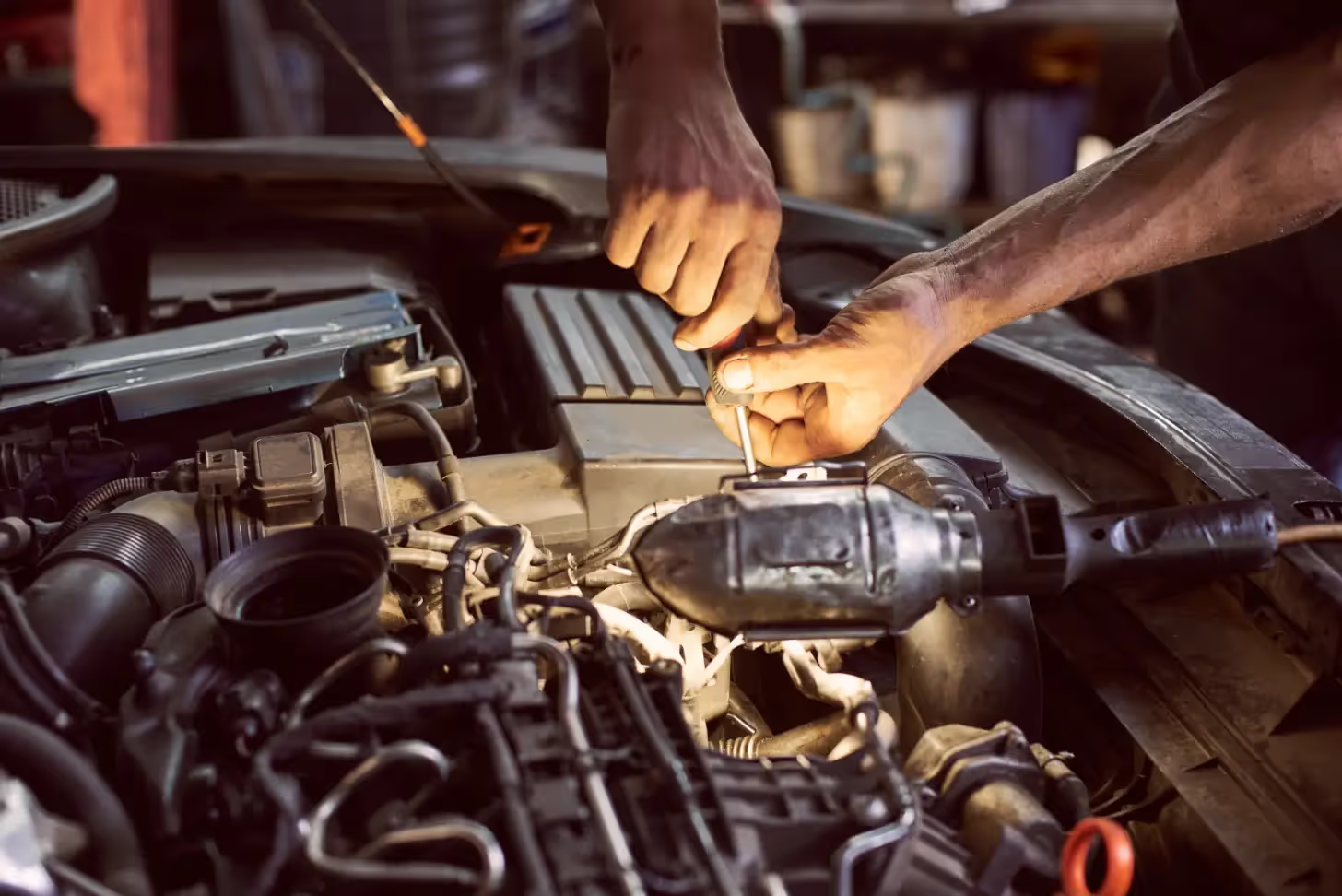
A shop can fix a broken truck. A dependable fleet maintenance provider should also help you reduce how often your trucks reach that point.
For fleets around Grayson, the right provider should understand your vehicles, maintenance schedules, recurring problems, and operating demands. Consistent fleet maintenance services can give you a more organized approach to keeping trucks available for work.
Should a Fleet Maintenance Provider Focus on Prevention?
Yes. If every visit starts with a breakdown, your maintenance program has become reactive.
A good fleet preventive maintenance program creates scheduled opportunities to inspect trucks, service fluids, identify wear, and address developing problems. Heavy-duty preventive maintenance can include oil and fluid checks, tire inspections, brake evaluations, and other system-specific work.
Look for a provider willing to build maintenance around your actual operation. Mileage matters, but engine hours, vehicle application, manufacturer requirements, age, and previous repairs can also influence service needs.
What Should a Fleet Preventive Maintenance Schedule Include?
Your provider shouldn't apply the same maintenance schedule to every vehicle without considering how each unit works.
Some trucks accumulate highway miles quickly. Others spend substantial time idling or working locally around Grayson and Carter County. Service planning should reflect those differences.
A structured preventive maintenance schedule can organize service around mileage, time, or engine hours. Your provider should also maintain enough flexibility to investigate problems that appear between planned services.
Typical maintenance areas include:
- Engine oil and filters
- Cooling system
- Transmission and driveline
- Air brake system
- Tires and wheel ends
- Steering and suspension
- Electrical and charging systems
- Aftertreatment equipment
- HVAC system
- Fluid leaks
Manufacturer recommendations should remain the starting point for service intervals and fluid specifications.
Does the Provider Understand Heavy-Duty Diesel Systems?
Heavy-duty trucks aren't oversized passenger vehicles. Their braking, drivetrain, emissions, suspension, and diesel engine systems require appropriate knowledge and repair procedures.
For example, medium- and heavy-duty trucks commonly use compressed-air brakes. Components can include air compressors, dryers, tanks, brake chambers, slack adjusters, S-cams, brake shoes, and drums.
A provider should also understand diesel aftertreatment systems. Modern heavy-duty trucks can use EGR, DPF, SCR, DEF, and DOC components to manage emissions.
That system knowledge matters during diagnosis. Replacing a component based on a symptom alone can leave the actual problem unresolved.
How Important Are Diesel Diagnostics?
Accurate diesel diagnostics can save your fleet from unnecessary parts replacement and repeat shop visits. A warning light tells you there is a problem, but it doesn't always tell you which component caused it.
Look for a maintenance provider that investigates symptoms in context. Fault information, operating conditions, fluid condition, repair history, physical inspections, and system testing can all contribute to diagnosis.
Your drivers can help here. Encourage them to document warning lights, unusual noises, performance changes, leaks, temperatures, and what the truck was doing when the problem appeared.
Should Your Provider Track Repair History?
Repair records become more valuable as your fleet accumulates service history. A single cooling-system repair may be routine, while repeated cooling problems on the same unit deserve closer attention.
Useful fleet maintenance records can include:
- Date and mileage
- Engine hours, where relevant
- Driver complaint
- Diagnostic findings
- Repairs performed
- Parts replaced
- Fluid and filter services
- Repeat problems
- Upcoming maintenance needs
- Time out of service
Organized records help technicians recognize patterns instead of treating every visit as the first time they've seen the truck.
They can also help you compare units. A truck requiring repeated unscheduled repairs may need a different maintenance approach than the rest of the fleet.
Can a Fleet Provider Help Reduce Downtime?
No repair provider can eliminate every breakdown. However, planned inspections and timely repairs can help reduce failures caused by neglected or developing problems.
The goal of fleet maintenance in Grayson, KY should be to create more predictable service whenever possible. Scheduling a truck for maintenance gives you more control than losing it unexpectedly during a delivery or job.
Maintenance tracking can support that process. A well-organized fleet preventive maintenance program can use service history and recurring intervals to help managers identify upcoming work before it becomes overdue.
Ask prospective providers how they handle recurring problems and follow-up repairs. Their answer can tell you a lot about whether they approach fleet service strategically or simply wait for the next work order.
Does the Shop Understand Seasonal Fleet Maintenance?
Kentucky gives commercial trucks different maintenance concerns throughout the year. Hot summers place demands on cooling and cab climate systems, while colder weather makes dependable heating, defrosting, batteries, and starting performance especially important.
Your provider should account for those seasonal changes during inspections. Preparing equipment before the weather shifts gives you time to correct problems without waiting for the first extreme-temperature day.
Don't overlook the heavy-duty truck HVAC system during winter maintenance. Heating, air conditioning, airflow, and defrost functions work together to support cab comfort and windshield visibility.
Seasonal planning also gives you an opportunity to inspect coolant condition, hoses, batteries, electrical connections, and other components affected by temperature changes.
Should HVAC Maintenance Be Part of Fleet Service?
Yes. Truck HVAC maintenance deserves attention throughout the year rather than only after the driver loses heating or air conditioning.
Summer problems can make long shifts uncomfortable, while winter HVAC problems can affect heating and defrost performance. Changes in airflow, temperature, unusual noises, or system performance should be reported before the system stops working completely.
How Should a Fleet Shop Handle Recurring Repairs?
Repeat failures deserve investigation. Replacing the same component several times without asking why it keeps failing can increase both repair expenses and downtime.
Your provider should review previous work when the same truck returns with a familiar symptom. That history may reveal a pattern involving operating conditions, another component, maintenance practices, or an unresolved system problem.
Ask what happens when a repair doesn't solve the complaint. Clear communication and documented findings make follow-up work easier for everyone involved.
What Should Communication With Your Fleet Provider Look Like?
Fleet managers need useful information to make repair decisions. A vague message that a truck "needs work" doesn't provide much help when you're planning routes and budgets.
Your provider should clearly explain:
- What technicians found
- Which repairs need immediate attention
- Which items can be monitored
- What maintenance is coming due
- Whether additional diagnosis is required
- Which recurring problems deserve attention
Communication should work both ways. Give the shop accurate vehicle information, driver complaints, previous repair details, and operating conditions whenever possible.
That context can shorten the path between a symptom and an accurate diagnosis.
Should a Fleet Provider Understand Your Operation?
A five-truck local operation doesn't necessarily have the same priorities as a larger regional fleet. Vehicle types, duty cycles, routes, loads, annual mileage, and available spare trucks can all affect maintenance planning.
A good commercial fleet maintenance provider should learn how your vehicles earn their keep. That knowledge makes it easier to plan service around operational demands instead of treating every truck as an isolated repair.
Location matters too. Fleets based around Grayson may run throughout Carter County, eastern Kentucky, or farther along I-64 and other regional routes.
The more your provider understands those operating patterns, the more useful your maintenance conversations can become.
Choose Your Fleet Partner
A dependable Grayson fleet maintenance provider should combine preventive maintenance, heavy-duty system knowledge, accurate diagnostics, useful records, seasonal preparation, and clear communication. Those qualities can help you make better maintenance decisions before problems interrupt scheduled work.
For professional fleet maintenance services in Grayson, KY, contact Bluegrass Diesel Repair. Building a consistent service relationship gives your fleet a familiar place to manage inspections, maintenance, diagnostics, and repairs.
For another way to prepare your trucks for Kentucky's seasonal demands, learn how to keep your diesel trucks' HVAC systems running all summer efficiently.