
What is the Difference Between Welding and Fabrication?
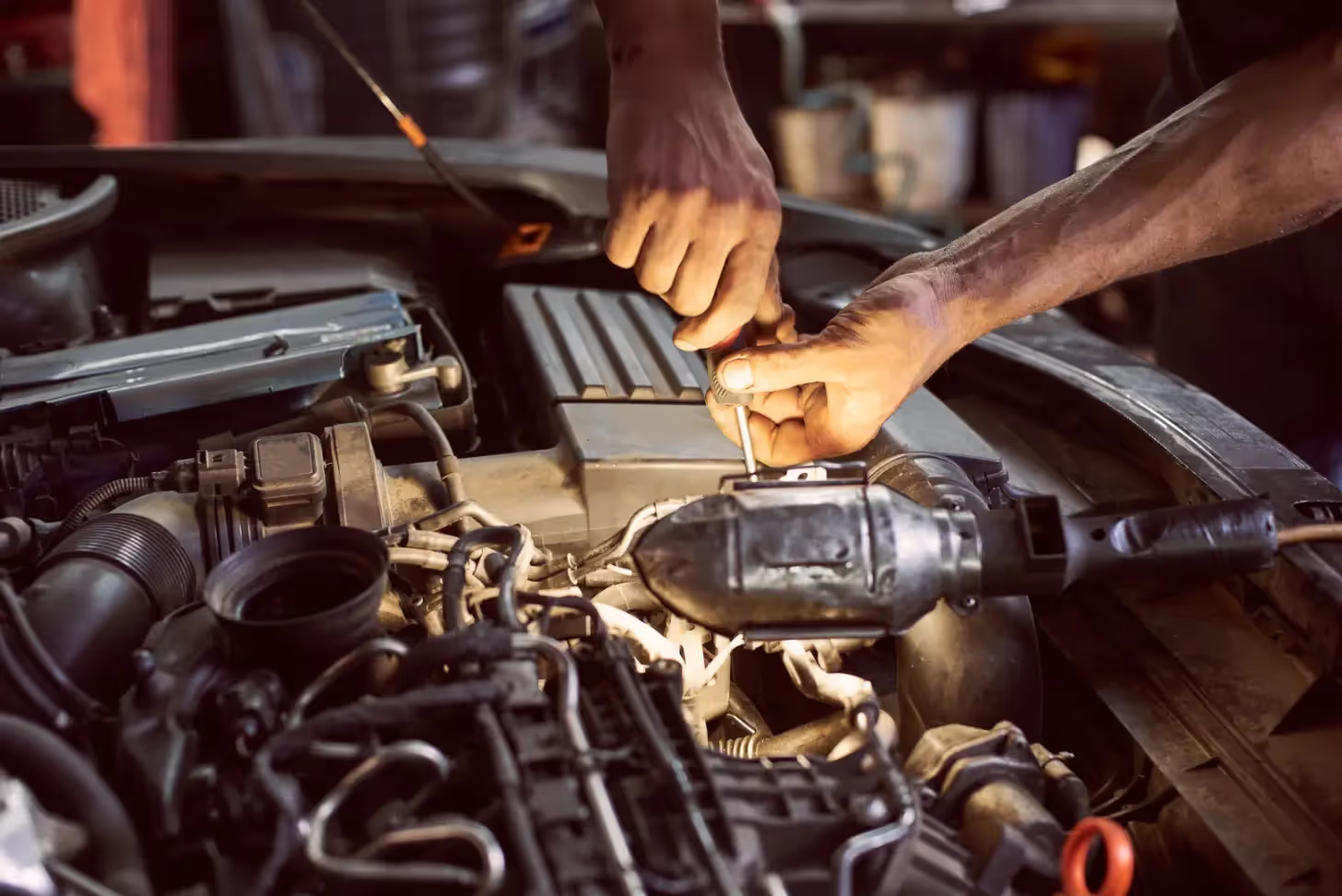
Welding and fabrication mean the same thing, right? Well, not exactly. If you’re scratching your head, wondering whether they’re interchangeable or distinctly different, you're not alone.
These terms are often used interchangeably, but each plays its own unique role in keeping heavy-duty equipment tough, reliable, and road-ready. Still confused? Well, we’re about to make things a whole lot clearer for you.
Fabrication: Building from the Ground Up
Picture fabrication as the construction phase of a structure. It’s the process of designing, shaping, and assembling raw metal into usable parts or entire assemblies. Before anything is welded, bolted, or riveted, it has to be fabricated.
Fabrication involves several key processes:
- Cutting: Using plasma cutters, torches, or CNC machines to slice metal into precise shapes.
- Bending/Forming: Shaping metal with brakes, rollers, or hammers to create curves or angles.
- Machining: Milling or drilling holes and surfaces to exact specs.
- Assembly: Piecing together components in preparation for welding or fastening.
In other words, fabrication is where structure begins. Whether it’s a custom bracket, a heavy-duty trailer frame, or a reinforcement plate for a cracked chassis, it all starts with fabrication.
Welding: The Glue That Binds
Once the parts are fabricated, it’s time for welding to take the stage. Welding is the process of fusing two or more pieces of metal together using heat, pressure, or both.
The most common types of welding in heavy-duty repair include:
- MIG (Metal Inert Gas) Welding: Great for thick steel, often used in trailer and frame repairs.
- TIG (Tungsten Inert Gas) Welding: Offers precise, clean welds, often used on aluminum or thinner materials.
- Stick Welding (Shielded Metal Arc Welding): Rugged, reliable, and great for outdoor work and field repairs.
Think of welding as the final seal that transforms fabricated parts into a durable, load-bearing whole.
So, What’s the Difference?
To put it simply:
- Fabrication is about creating parts.
- Welding is about joining them.
Fabrication is the architectural phase: planning, measuring, cutting, and preparing.
Welding is the execution: melding everything into a unified, structurally sound form.
You can fabricate without welding (like assembling bolted parts), and you can weld without fabricating (like repairing a cracked weld on an existing part). But in diesel repair, they often go hand in hand.
Real-World Examples in Heavy-Duty Repair
Let’s make this practical.
Scenario 1: Cracked Trailer Frame
Your flatbed’s frame rail has a stress crack. The repair shop will:
- Fabricate a reinforcement plate tailored to the damaged area.
- Weld the new plate over the crack to restore strength.
Scenario 2: Custom Bracket for Air Tanks
You’ve installed aftermarket air tanks on a Class 8 rig. The shop will:
- Design and cut a bracket (fabrication).
- Weld it onto the truck frame or cross-member.
Scenario 3: Repairing Broken Suspension Mounts
A leaf spring hanger tears loose on a rough logging trail. The fix?
- Cut out the damaged hanger (fabrication + removal).
- Weld in a brand-new one, properly aligned and reinforced.
Each of these examples highlights how fabrication and welding work in tandem to keep your equipment on the road and out of the shop.
Skills and Equipment Involved
While both fields fall under metalwork, the skill sets are different.
- A fabricator needs strong skills in measurement, blueprint reading, cutting, and layout.
- A welder must understand metallurgy, joint design, welding technique, and inspection.
You’ll also find some crossover; many diesel techs in shops like Bluegrass Diesel Repair are trained to do both. But in larger operations or high-volume custom jobs, these roles might be split up.
Tools of the Trade:
- Fabricators use plasma cutters, angle grinders, shears, brakes, and CNC machines.
- Welders rely on MIG/TIG/stick welders, gas tanks, rods/wire, and shielding gases.
Why the Difference Matters in Diesel Repair
Understanding the difference between welding and fabrication isn’t just shop talk; it has real implications for repair quality, turnaround time, and cost.
- Need a quick weld on a cracked fender bracket? That’s a welding job.
- Need a one-off mount for a custom fifth wheel setup? You’re in fabrication territory.
When a shop like Bluegrass Diesel Repair tells you something needs to be fabricated and welded, now you’ll know exactly what that means and why it’s critical to get it done right the first time.
Conclusion: Different Tools, Same Goal
Welding and fabrication may be different processes, but they share a common goal: making your truck safer, stronger, and roadworthy. Fabrication builds the parts. Welding locks them into place. Together, they form the backbone of custom mods, structural repairs, and heavy-duty rebuilds.
Need expert fabrication or welding on your rig? Don’t let minor cracks turn into major failures. Reach out to our team at Bluegrass Diesel Repair, where craftsmanship meets heavy-duty durability.